

1916 to 1930s: “Food for Young Children” and “How to Select Food”
• Established guidance based on food groups and household measures
• Focused on “protective foods”
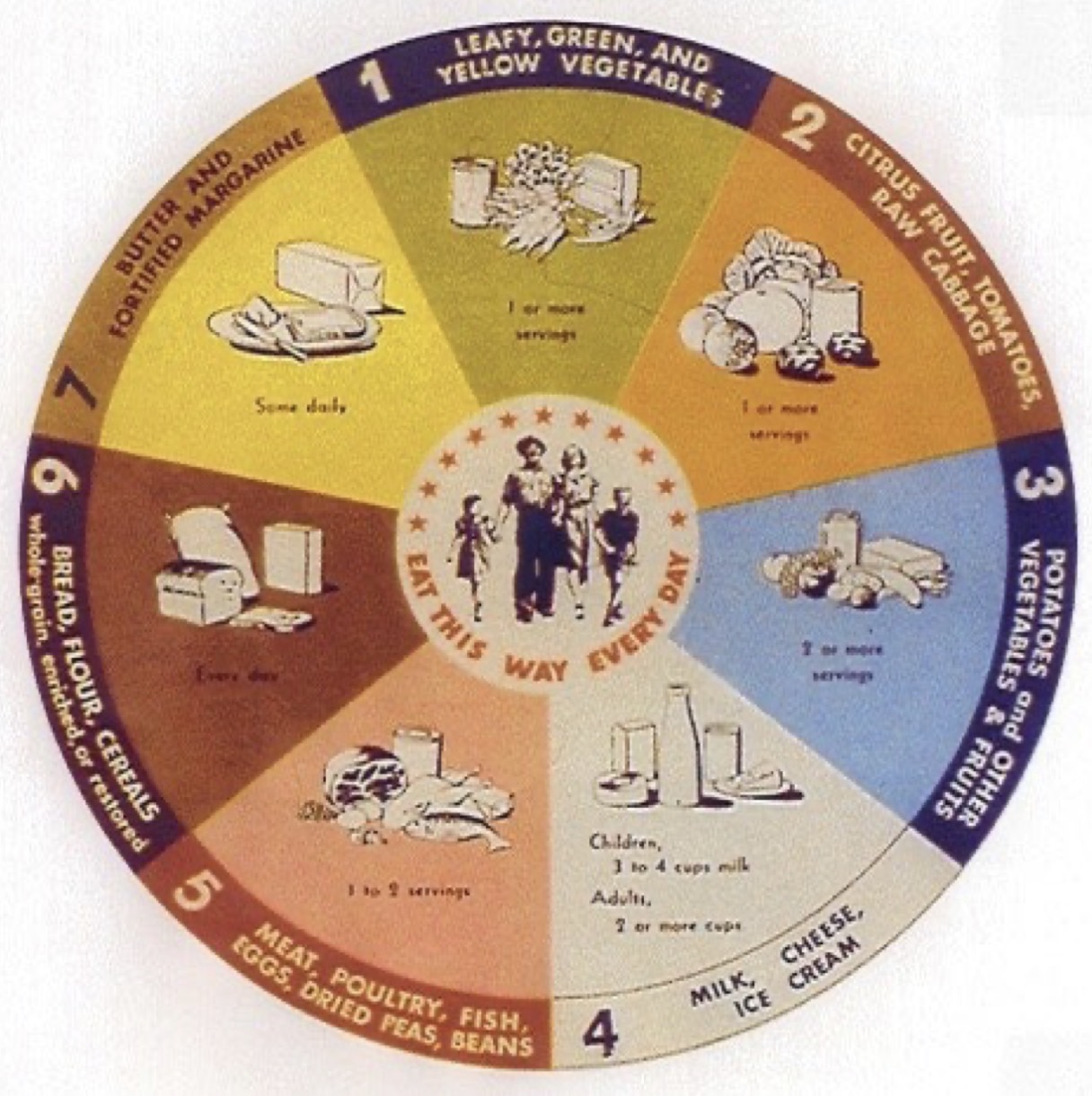
1940s: A Guide to Good Eating (Basic Seven)
• Foundation diet for nutrient adequacy
• Included daily number of servings needed from each of seven food groups
• Lacked specific serving sizes
• Considered complex
1956 to 1970s: Food for Fitness, A Daily Food Guide
(Basic Four)
• Foundation diet approach—goals for nutrient
adequacy
• Specified amounts from four food groups
• Did not include guidance on appropriate fats,
sugars, and calorie intake
1979: Hassle-Free Daily Food Guide
• Developed after the 1977 Dietary Goals for the United States were released
• Based on the Basic Four, but also included a fifth group to highlight the need to moderate intake of fats, sweets, and alcohol1984: Food Wheel: A Pattern for Daily Food Choices
• Total diet approach
• Included goals for both nutrient adequacy and moderation
• Five food groups and amounts formed the basis for the Food Guide Pyramid
• Daily amounts of food provided at three calorie levels
• First illustrated for a Red Cross nutrition course as a food wheel
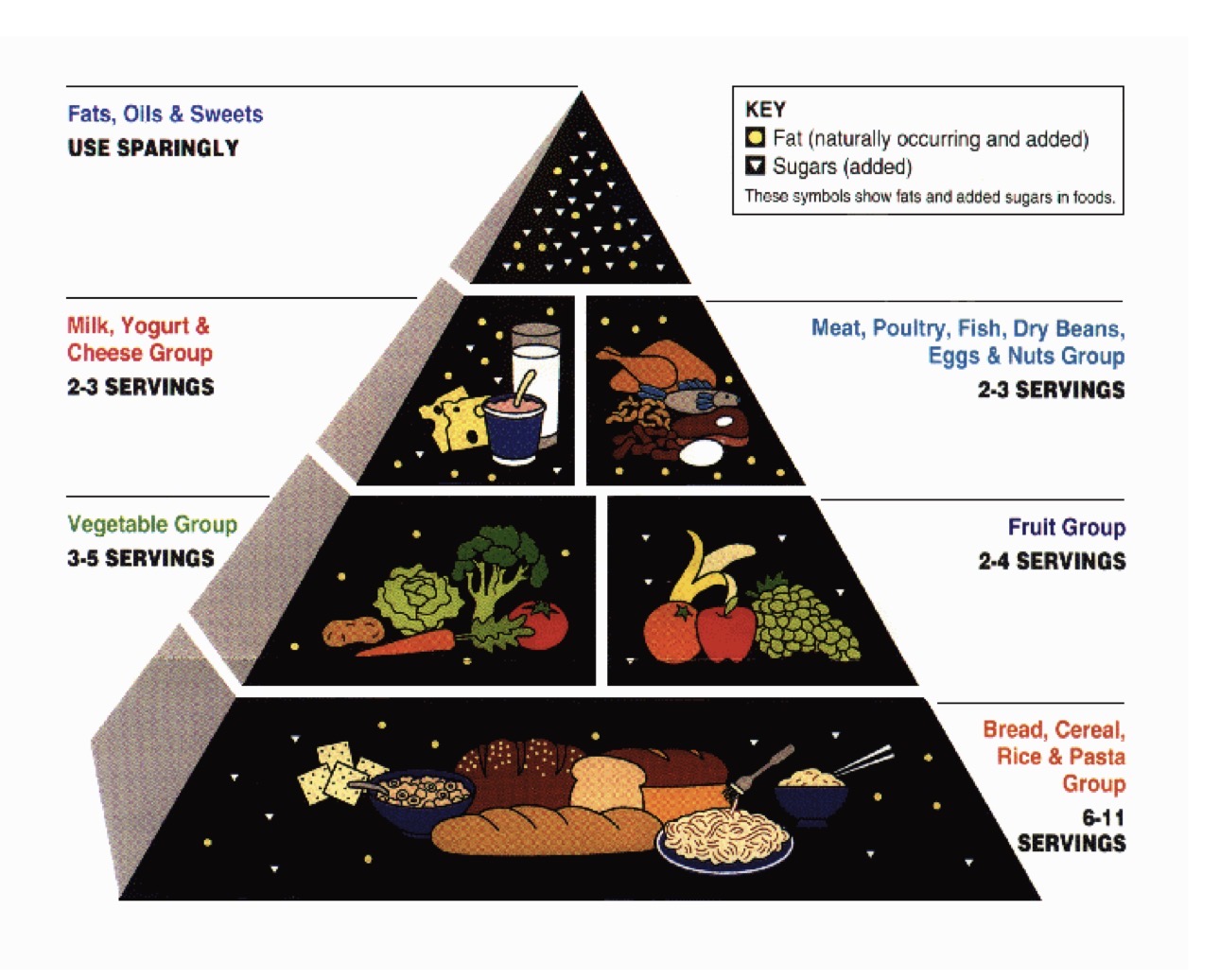
1992: Food Guide Pyramid
• Total diet approach—goals for both nutrient
adequacy and moderation
• Developed using consumer research to bring
awareness to the new food patterns
• Illustration focused on concepts of variety,
moderation, and proportion
• Included visualization of added fats and sugars
throughout five food groups and in the tip
• Included range for daily amounts of food across three calorie levels
2005: MyPyramid Food Guidance System
• Introduced along with updating of Food Guide
Pyramid food patterns for the 2005 Dietary
Guidelines for Americans, including daily amounts
of food at 12 calorie levels
• Continued “pyramid” concept, based on consumer research but simplified illustration. Detailed information provided on website “MyPyramid.gov”
• Added a band for oils and the concept of physical
activity
• Illustration could be used to describe concepts of
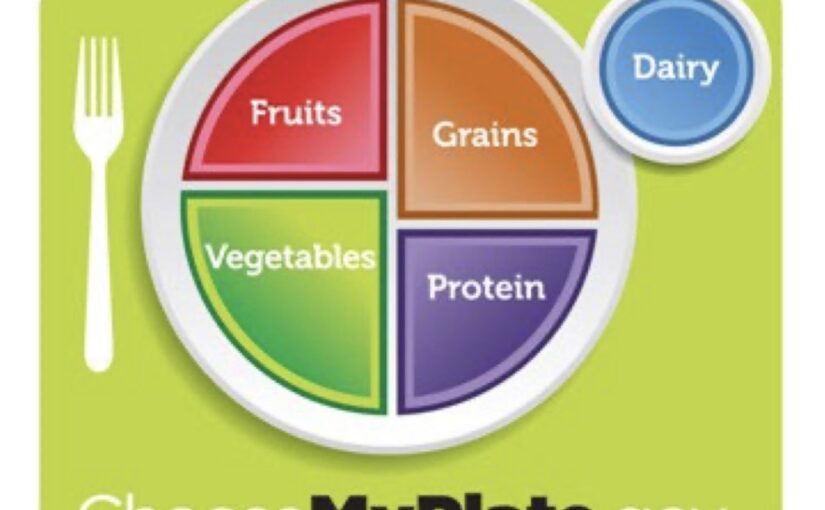
variety, moderation, and proportion2011: MyPlate
• Introduced along with updating of USDA food patterns for the 2010 Dietary Guidelines for Americans
• Different shape to help grab consumers’ attention with a new visual cue
• Icon that serves as a reminder for healthy eating, not
intended to provide specific messages
• Visual is linked to food and is a familiar mealtime symbol in
consumers’ minds, as identified through testing
• “My” continues the personalization approach from MyPyramid
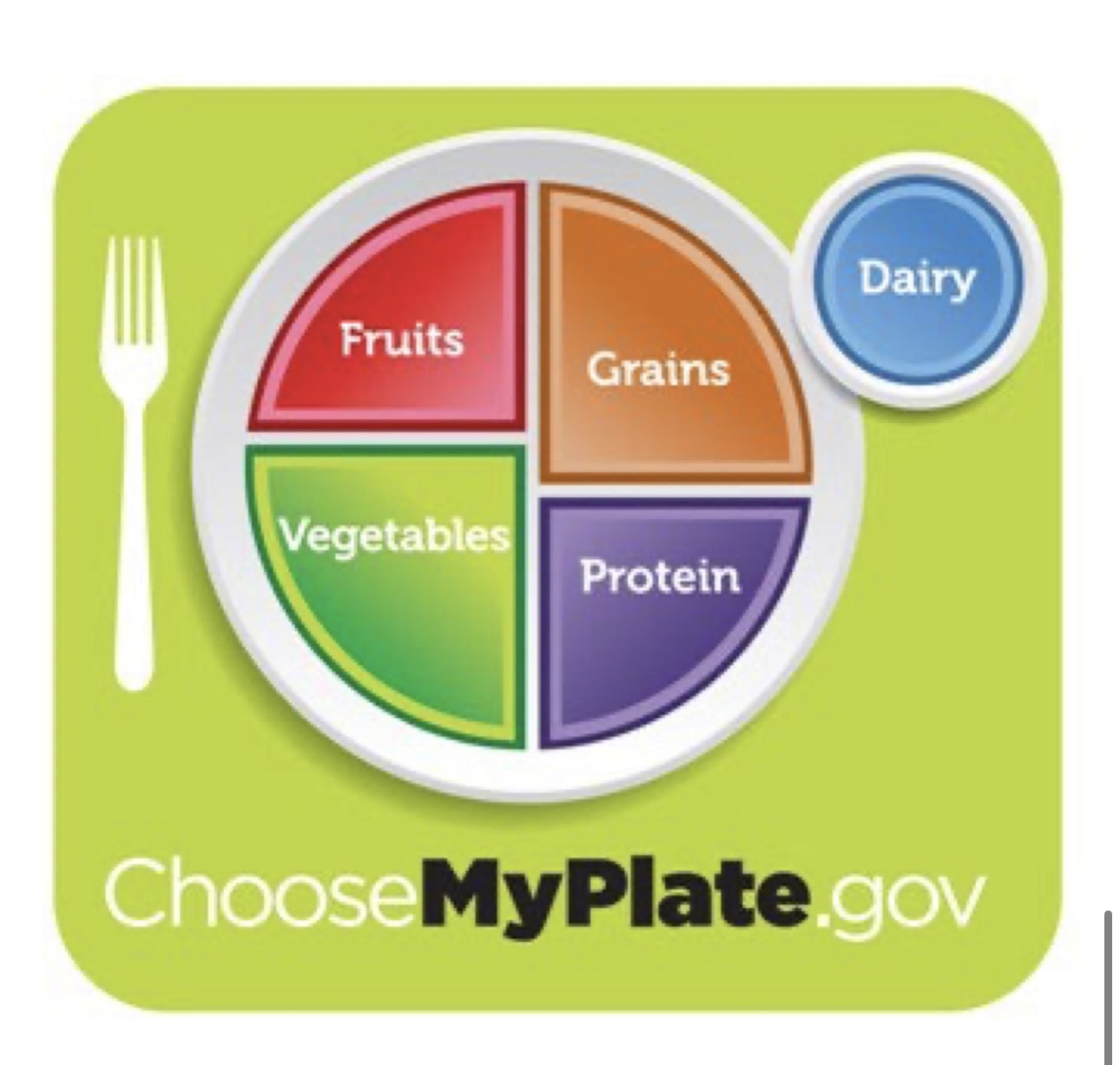
2020: MyPlate
• MyPlate continues to be a reminder to find a healthy eating style and build it throughout the lifespan
• Graphic updated to reflect a color palette that presents a bolder, cleaner visual
• URL shortened from ChooseMyPlate.gov to MyPlate.gov
For more information:
Welsh S, Davis C, Shaw A. A brief history of food guides in the United States. Nutrition Today
November/December 1992:6-11.
Welsh S, Davis C, Shaw A. Development of the Food Guide Pyramid. Nutrition Today November/December
1992:12-23.
Haven J, Burns A, Britten P, Davis C. Developing the Consumer Interface for the MyPyramid Food Guidance
System. Journal of Nutrition Education and Behavior 2006, 38: S124–S135.